Saturday, 4 December 2010

Christmas countdown: Advent Calendars


Advent calendars hold very good memories for me. I had one every year as a child and was always so excited to open a little door every morning. My favourite one was made for me by my parents out of a narrow box with doors carefully cut out, a funny picture drawn on each one and a sweet stuck behind them. My parents run a jewellery shop, so there is no busier time than in the run up to Christmas. The time and effort they put into making it was very special to me, and I'm hoping to recreate a similar feeling for Alice.

With that in mind, last year I bought an advent train. I couldn't resist it! It has tiny drawers to put a little something inside. When she's big enough I plan to make a jigsaw cut into 24 pieces that she can put together over the month. At the moment it contains dried fruit, which is less inventive, but seems to be going down well. I love seeing it on our mantelpiece and imagining years to come. It is so wonderful to be creating our own Christmas traditions and memories.


Friday, 3 December 2010

Christmas Countdown: Paper doves


I've made these before in school, but this time I've used sheet music to make the doves. I got a book of music from a charity shop for £1.50 and there's lots left. When I bought it, I felt a pang of guilt knowing that it would be cut into bits rather than used to make music, but it will give us happiness in another way. My piano playing on the other hand certainly wouldn't bring happiness to anyone with eardrums.

Anyway, here's how:

Stick a sheet of music to the front and back of a solid piece of card (I used a cereal box.)

Draw the body of a dove and cut out.


Make a hole for the wings to go through. A craft knife would be useful here. I made a slightly less professional job by pushing one blade of a pair of scissors through into a ball of blu-tack.

Concertina a rectangle of sheet music and push half-way through the hole. Fan out prettily.

Make a small hole in the back of the dove and loop through some thread or ribbon to suspend it.

These would look lovely on a Christmas tree, but as we're not having one this year for fear that Alice would eat her body weight in needles, I've hung my little flock from my dresser.


Thursday, 2 December 2010

Christmas Countdown: Cranberry Chutney


Part of my plan for Christmas this year was to make most of my presents. One of my ideas was to make a chutney, and I came across a very festive recipe for a cranberry chutney that I'm sure would go very well with turkey sandwiches!

I've never made so much chutney in one go before and found myself wishing that Father Christmas brings me a large preserving pan this year.


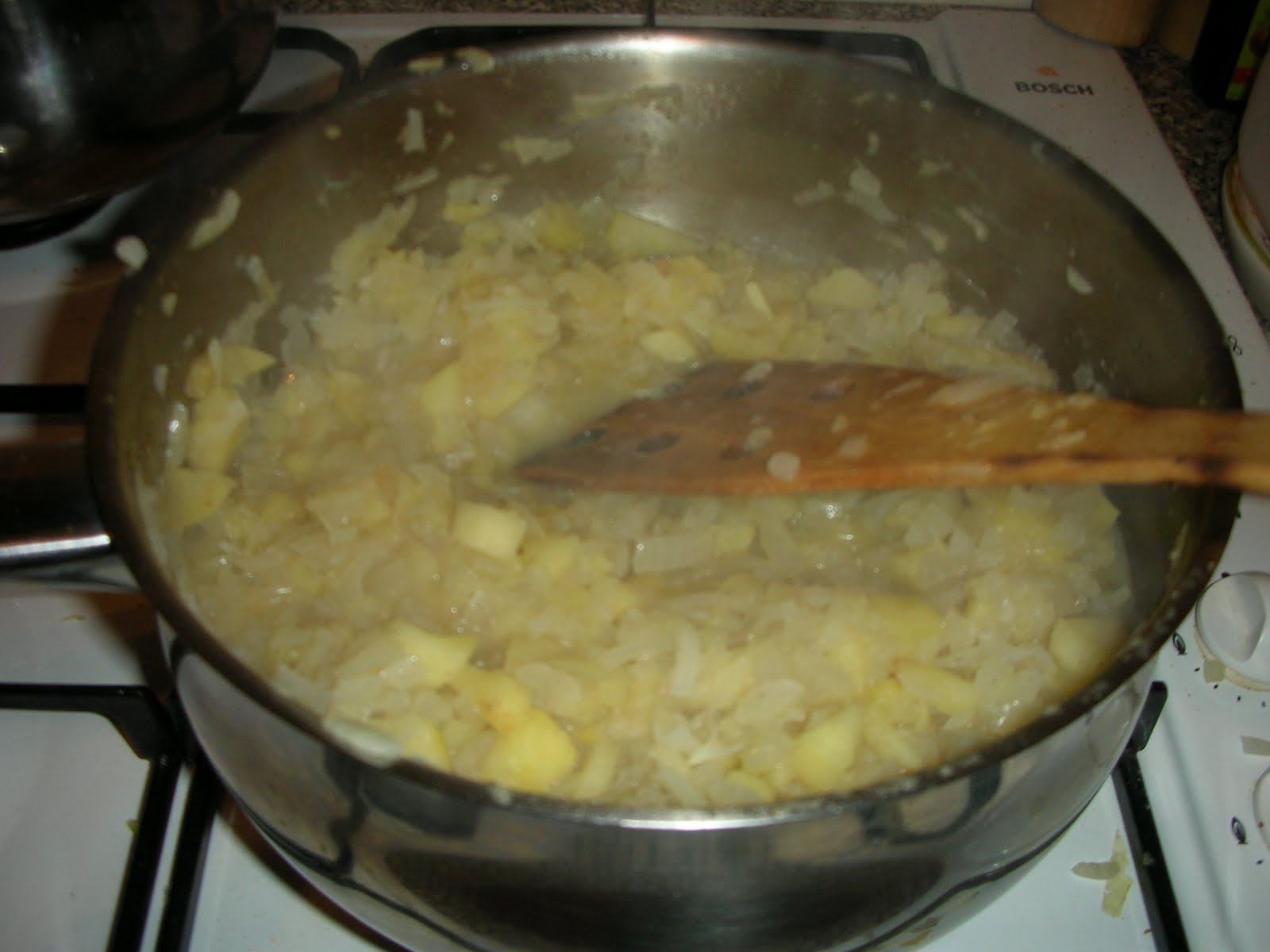
To make 6lbs of chutney, I heated 2oz butter, 22oz onions, 2lbs apples and 3tsps spices (cinnamon, nutmeg, ginger and allspice were what I went for) in a pan until the onions were soft and translucent.

Then added 1lb 8oz fresh cranberries and 2lbs light brown sugar to the pan and stirred for a few minutes before pouring in 30 fl oz white vinegar. After bringing it to the boil, it was then left to simmer for about an hour and a half.

I finally potted the gloopy mixture into sterilised jars.


I'm a bit nervous about the final result, as chutney needs to mature for 4-6 weeks to develop its flavour and texture, so I'm hoping it tastes as good as it looks. I managed to make 10 jars of the stuff, so it had better be tasty!

Wednesday, 1 December 2010

Christmas Countdown: Dried Oranges


It's December, and this year I'm absurdly excited. Knowing that Alice will really appreciate it for the first time is making me see it through her eyes, I think. Being a stay at home mum has allowed me to fulfil my dream of having a craft filled, home made sort of Christmas, and to encourage me to do as much as I can I've decided to try and write a blog post a day to document what we've been up to. I hope I don't regret making this promise!

To start off then, here's my first offering!
Dried Oranges

Cut the oranges into slices around 1cm thick and sponge dry with kitchen paper or a cloth.

Rub with ground cinnamon and nutmeg, or whatever Christmassy spices you like best.

Put directly onto oven rack (I put mine on a wire cooling rack first to
make it easier to get them out)

Heat at 130° (GM 1) for about an hour or until the oranges are dry.

Use a needle and thread to make ties to hang the slices up with, or leave them as they are in a glass jar, vase or bowl.

Unfortunately, my terrifyingly temperamental oven scorched a few slices, but I still like them, and they smell amazing.


Friday, 26 November 2010

Trust

To have a strong relationship with someone, it is essential to trust them, but if we trust our children, we're often frowned upon, or at least deemed irresponsible.

It is not only children who are mistrusted. From the moment of conception, we're encouraged to put ourselves in the care of professionals. Doctors and midwives take blood samples, measure heart rates and take scans. During the birth, mother and baby are monitored, and all too often the birth is taken out of the mother's control. It seems a natural progression then that professionals should continue to be involved with the subsequent care of the baby. Health visitors, well meaning friends and of course, the ubiquitous baby care book are all on hand to offer advice and the mother learns to ignore her instincts.

Those who practise cry it out or controlled crying techniques rarely enjoy the experience. The sound of a baby's cry, even one that isn't ours, spurs us to do something about it. To ignore a baby's cry goes against our instincts. Jean Liedloff writes in The Continuum Concept that 'young mothers read and obey, untrusting of their innate ability, untrusting of the baby's 'motives' in giving the still perfectly clear signals." (p.49) In our society, children, even babies, are viewed with suspicion. Rather than trusting that their cries signal a need, we are told that they are manipulating us. Liefloff continues, saying that "Babies have, indeed, become a sort of enemy to be vanquished by the mother. Crying must be ignored so as to show the baby who is boss, and a basic premise in the relationship is that every effort should be made to force the baby to conform to the mother's wishes." (p.49). In this relationship, there is no trust. The mother no longer trusts herself, and she certainly doesn't trust the baby to know his own mind. Saddest of all, the baby soon learns that its mother cannot be trusted to fulfil his needs.

This pattern continues as the child grows. 'Pick your battles' while true in essence, and something I regularly remind myself of, emphasises the way we view our relationship with our children as an adversarial one. There can be no real trust with an adversary. Locked in a battle of wills with their children, it is no surprise that many parents find themselves under huge stress. Would it be so disastrous, however, to trust our children? To assume, unless clearly proven otherwise, that their motives are good? Christina Fletcher, writing in The Mother says of children 'it's important to see them as Who They Really Are through our words, actions and thoughts, and make them feel like they have great worth to the world." (p.31) When we see them this way, when we trust in them, they will more often than not live up to our expectations.

Fletcher, C. (2010, November/December).Dealing with sibling rivalry with spirit. The Mother, 43, 31-32.

Liedloff, J. (2004) The Continuum Concept (New Ed edition)
London: Penguin.

Monday, 22 November 2010

Toddlers


Life is tough for a toddler. Imagine you have just begun to realise your sense of self. You have preferences and are starting to realise that your actions have an effect on the world. This is an exciting development, but it's also a frustrating one. Barely an hour goes by without someone trying to make you sleep when you aren't tired, to stop you pulling put the interesting wires in the wall, to put you in a pushchair when you haven't finished playing or to feed you unknown substances without giving you a chance to look at them closely.

Imagine you are living in a world where people communicate through an unfamiliar language, and although you are beginning to understand, there is a lot of confusion. Your own words are few and frequently misunderstood by those around you. You are beset by emotions that are too big for you to deal with yet, and sometimes the strength of them is scary.

It is all too easy to view toddlers' tantrums and shouting as mere defiance. To think that their sole purpose in life is to thwart whatever you have planned for them. It is easy to become frustrated and wish that they would just do as they were told. Taking a step out of your own needs and feelings for a moment, and seeing the world as it is to them can help us to remain calmer and more tolerant. Allowing some freedom to choose, to consider whether what we are asking is too much and to devise compromises wherever possible can go a long way to smoothing their path through a tricky time, and allowing ourselves to feel calmer.

1. See it from their point of view. A child who screams when having their coat put on may just be too hot. They don't know that the temperature will change when they get outside. Maybe try going outside first before putting it on, or playing a hide and seek game with their fingers.

2. Leave lots of time for potentially contentious tasks. Walking to the shops may take four times as long if you stop to look at every leaf and stone on the way, but it will be a lot less stressful.

3. Allow some degree of choice. Sometimes choices overwhelm children, but allowing some control over their day will make them feel a little less powerless. It makes no difference to you which shoe goes on first, but it might to them.

4. Distraction often works like magic. Breaking into song or playing pat-a-cake might be all that's needed to halt a stand-off.

5. Be aware of danger times. Tiredness and hunger makes us all grumpy, but is especially hard when you are small. Try to arrange jobs that must be done just after nap times or meals when your toddler is at their most amenable.

6. Talk to them. Explain what you are doing and why you are doing it. They may not understand every word, but they are starting to get the gist of most of what you say. If you're going to leave the park soon, tell them. To be whisked away from a task you were enjoying would annoy anybody, but some advance warning may help.

7. Listen to them. Even if they don't seem to be saying proper words, they are trying to communicate and it is only polite to listen to them. You might be surprised at how much they can convey. Even if you don't understand, they will at least feel you are taking notice.

8.When tantrums hit, stay close. Turning your back or ignoring the tantrum isn't showing your child that their behaviour isn't acceptable, it is telling them that they are unacceptable. Although a hitting, kicking, screaming child might seem defiant, they are just out of control. You wouldn't leave them if they were crying in sadness or pain, why leave them when they are overwhelmed with anger and frustration? Sometimes a hand laid on their chest, or just sitting by is all that's needed to let them know you are there to help. Naming their feelings is another useful way to show you understand and to help them recognise what is happening to them.

9. Enjoy your toddler. When you've had a particularly trying time, make sure you find some time to reconnect with your child. Taking a nap together while you stroke their hair, or playing a favourite game reminds you both that your relationship is based on love not opposition.

10. Take time for yourself. If you are exhausted and at your wits' end, you can't give anything back to your toddler. I know you've heard this advice before, and it's easy to scoff and say you've no time for it, but make time. It takes far less time than you'd think to recuperate. 5 minutes of meditation, 10 minutes for a cup of tea and a biscuit or 20 minutes for a hot bath. Try and fit time for yourself in to the day and your whole family will benefit.

Wednesday, 17 November 2010

Christmas Cake


I'm quite overexcited about this one. It's always been an aim of mine to make a Christmas cake, but I've always been too disorganised to get one prepared earl y enough. Seeing how cheap they are in the shops compared to how much the ingredients cost is another little niggle, but I'm confident the time, effort and money spent will be worth it.

Contending with a scorchingly hot fan oven has put me off baking a little until my mum kindly bought me an oven thermometer. With this I have discovered that turning the dial to 50° results in an oven temperature of 150°! Some careful jiggery-pokery and turning the dial fractional amounts allowed me to finally get a l ow enough temperature to cook the cake long and slow. I held my breath a little before taking it out, and actually gave a shriek of joy that it looks like it should do!

I wrapped it up in foil and settled it into a tin with no less care than I tuck Alice up at night, and I'm already looking forward to feeding it next week. You don't get this much fun with a shop bought one!